
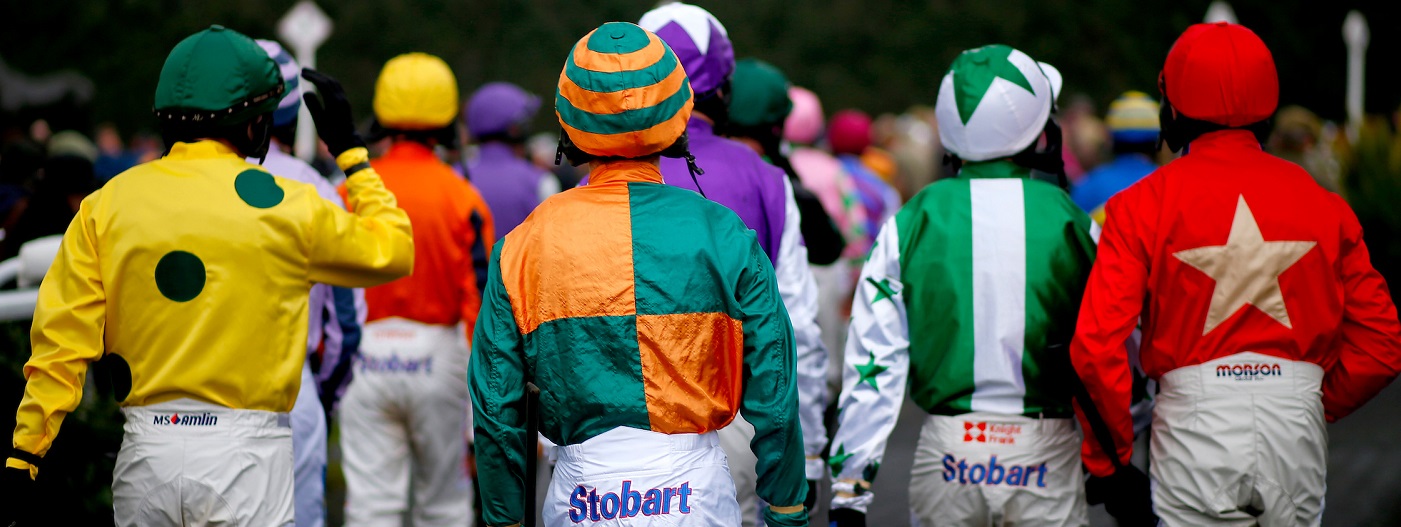
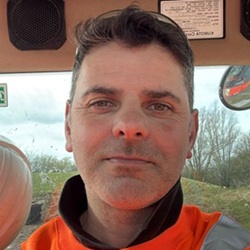
Amir Quinn started out at the British Racing School and rode as a Flat jockey based in the South of England, turning from Amateur to Apprentice in 2000, first to Gary Moore and then Jim Boyle for whom he rode out his Claim. He rode around 140 winners at home and abroad and had around 2,500 rides. He stopped race riding in 2016 aged 36 and continued to ride out for William Knight but, wanting to earn more money, he made the switch into the construction industry. With the support of JETS funding, he has since gained various construction machinery qualifications and is now working towards becoming a qualified site engineer.
Did you know what you wanted to do as a second career?
Not at all. I was very much figuring it out as I went along. I stayed in and around racing for a while, riding out, driving the doctors at Brighton Racecourse, working as a groundsman at Fontwell and even working on the bar at a local wedding venue. It was a bit of a mix to say the least.
In 2018, I started working for my partner’s brother who runs a civil engineering company. That’s where things began to fall into place. I started out as a yardman and gradually worked my way up to a grounds operative. I realise I wanted to progress further so I got qualified on different types of machinery and contacted JETS who helped me get my excavator ticket. These tickets were a real turning point, as suddenly more doors opened, I had more choice over jobs and I could work closer to home which made a big difference to family life.
What was it like switching from the racing environment to construction?
It was definitely an adjustment. In racing you’re so focused on the day-to-day that you don’t always think about what comes next. Stepping into a completely different industry makes you quickly realise the importance of stability and planning ahead.
A bit like racing, in construction there are loads of opportunities if you’re willing to work for it and there’s a clear path to progress, which I like. Starting from scratch is a bit daunting but the discipline and work ethic I already had helped me get stuck in.
The work is physical and I was used to early mornings anyway, so that wasn’t a shock! There’s also a good sense of teamwork on site, plenty of banter, which definitely helps the day go quicker. I’ve worked on all sorts of projects too: water sites, solar farms, landscaping, high-end houses, electrical work. It keeps things interesting and means you’re always learning something new.
What is the current course you’re doing and what are the next steps?
It’s a mapping and surveying intensive course based in Northampton. There’s quite a bit of Maths involved which has been an experience! Let’s just say the calculator has become a good friend again. Over the last 7 or 8 years, I have gone from groundwork into machinery and this feels like the next step forward. The plan is to complete a Level 3 NVQ which will give me a gold card in site surveying. I’m hoping to get that done within three to six months while continuing to build up my portfolio.
How has JETS supported you?
They’ve been really supportive and made everything straightforward when it came to applying for help with funding courses. My instructor was even able to liaise with them directly which made things easier. I’d definitely recommend others to get in touch with them – it’s well worth it.
What skills has your new career given you?
Before construction I didn’t have a clue when it came to using tools or machinery. Now I’ve picked up experience in building, groundworks, landscaping, fencing, a bit of everything. It’s given me a lot of confidence and it’s nice to be able to actually fix or build things yourself at home!
Do you still stay involved with racing?
Yes my partner runs a syndicate , All For One Racing so I still get to go racing when I can, visit the yard and catch up with familiar faces. Once you’ve been part of it, it’s hard to completely step away.
Where do you see your career going from here?
I’m aiming to step into a senior site surveyor or engineering role. It’s more technical and involves a lot more theory but it’s an important part of the industry and something I’m keen to develop. I’m also building a freelance portfolio which should hopefully give me more flexibility and options going forward.
What advice would you give to others?
Don’t leave it too late to start thinking about what comes next. Things can change quickly and it’s much easier if you’ve already got something in place. Even doing a course on the side can make a big difference. The more prepared you are the smoother the transition will be. Looking back, I probably would’ve started planning earlier – but at the same time you learn as you go. And no matter when you start, picking up new skills is never a bad thing.
March 2026